
Podcast: Play in new window | Download (Duration: 40:37 — 37.2MB)
Subscribe: Apple Podcasts | RSS | More
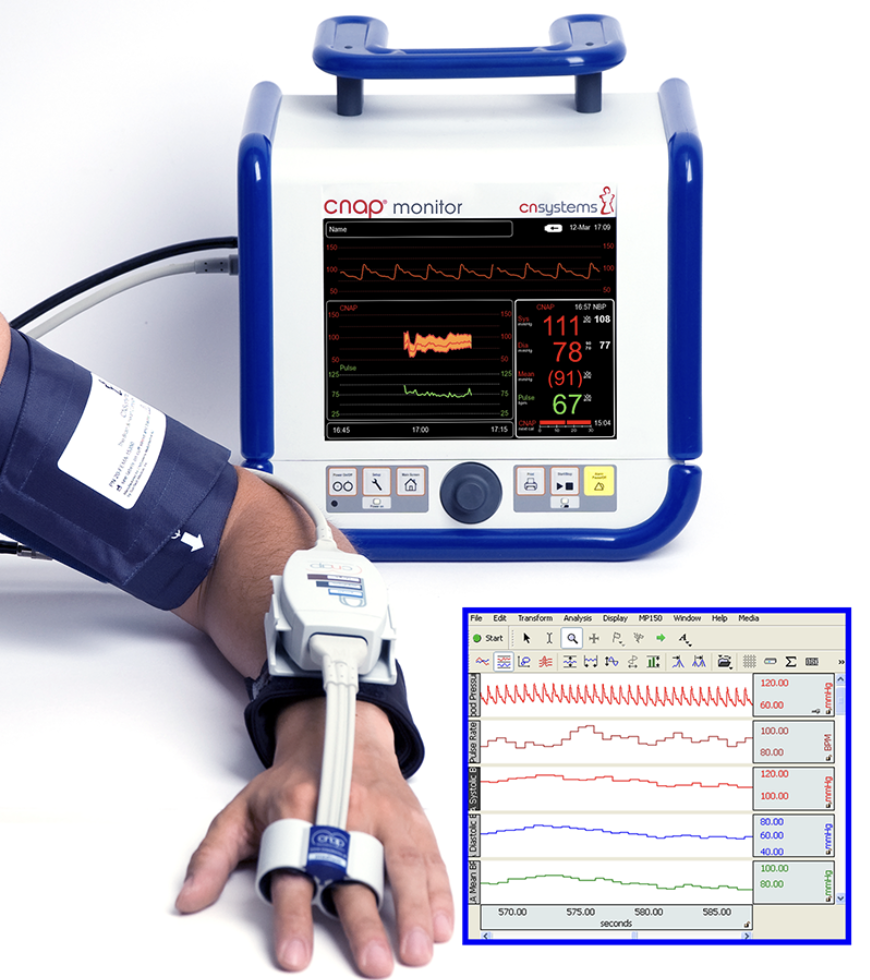
Hypothetical Case:
You finish injecting the spinal anaesthetic for your patient who has come for an urgent caesarean section. She has pre-eclampsia and her blood pressure just before you started was 180/100.
Just after lying down she starts vomiting and unfortunately the non invasive blood pressure cuff is going up and down but not giving you a number – she is shaking and can’t stop moving around. Is she vomiting because of hypotension, should you give her a bolus of phenylephrine? What if she is actually still hypertensive – you don’t want to push her BP over 200. Wouldn’t it be great if you had a beat to beat continuous display of her BP – maybe you should have placed an arterial line before starting. Are there any other options that might have been helpful???
Hi everyone,
This week I am joined by John to discuss continuous non-invasive blood pressure monitoring. Many of these technologies have actually been around for a number of years now, but despite this don’t seem to be in commonplace usage. There does seem to be a recent renewed interest in re-evaluating these technologies. How do these technologies work? How accurate are they? Have there been any improvements? What are the economics and costs?
Thanks John for all your hard work researching this topic!
Methods
- Arterial Applanation Tonometry
- Volume Clamp Method
- Photoplethysmography (PPG): Origins to Modern Applications in Wearable Technology